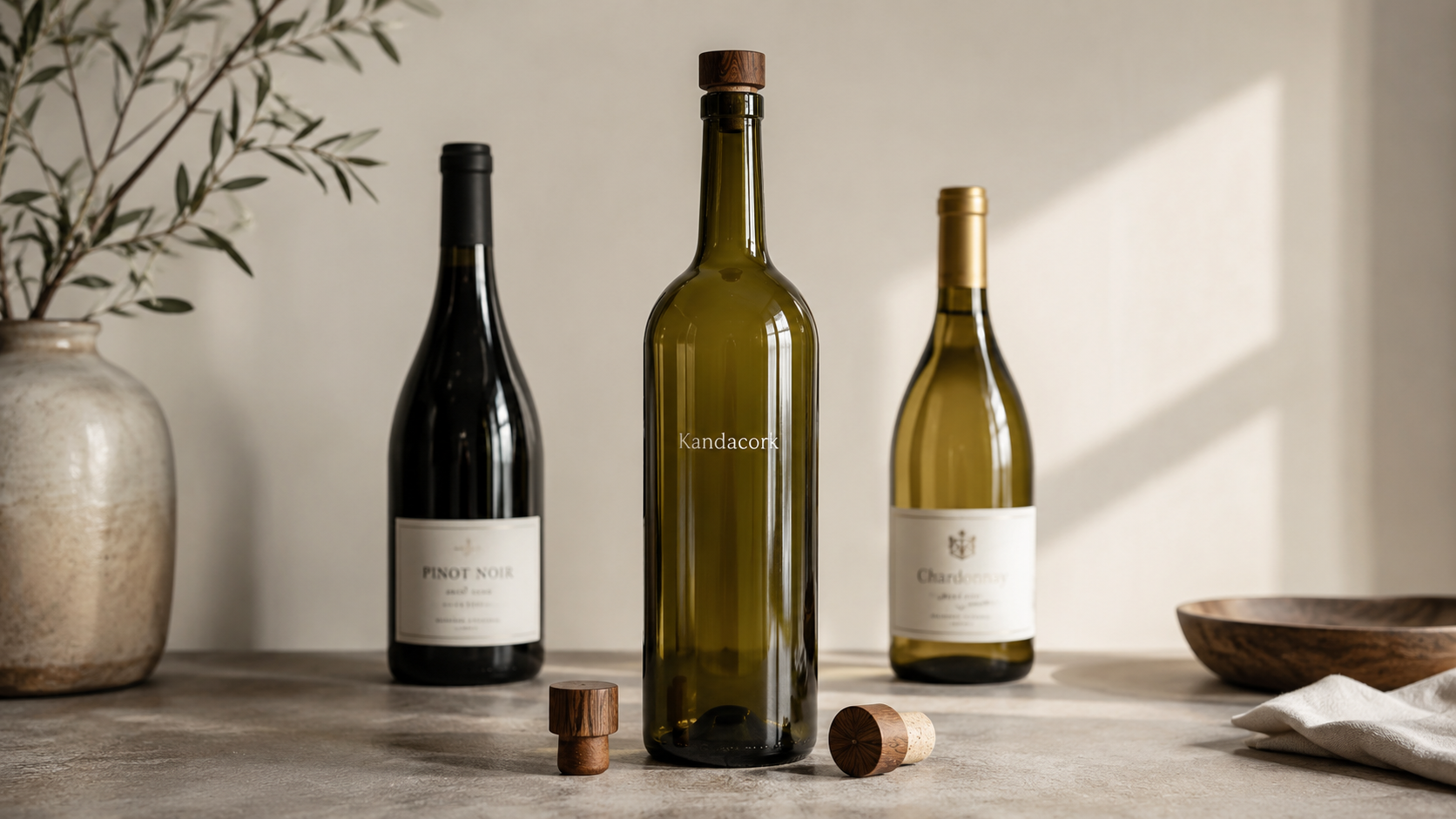
The bottle frosting process is a glass surface treatment used to create a matte, translucent, or satin finish on glass bottles. It is commonly used for spirits, perfume, cosmetics, wine, gourmet beverages, home fragrance, and premium gift packaging where the bottle needs to look more refined than standard clear glass.
For most premium packaging projects, acid etching is best for a smooth luxury satin finish, sandblasting is best for partial patterns and tactile surface effects, and spray frosting is best for colored matte or gradient designs. Kandacork Glass supports brand owners and packaging buyers with custom bottle finishing, including frosting and etching services for premium glass bottle projects.
A successful frosted bottle is not only about appearance. It must also be practical for decoration, filling, closure matching, packing, shipping, and repeat production. This guide explains how the bottle frosting process works, how to choose the right method, and what buyers should confirm before placing a bulk order.
What Is the Bottle Frosting Process?
The bottle frosting process changes the outer surface of glass to create a soft matte or semi-opaque appearance. Instead of reflecting light sharply like clear glass, a frosted surface diffuses light and creates a calmer, more premium visual effect.
In packaging, terms such as frosted glass bottle, acid-etched glass bottle, sandblasted glass bottle, satin glass finish, and matte glass bottle finish are often used together. However, they do not always describe the same process. Acid etching chemically treats the glass surface. Sandblasting uses abrasive media to create a textured effect. Spray frosting applies a decorative coating to create a matte, translucent, or colored finish.
A professional bottle frosting process should create a surface that is consistent, durable, and compatible with the rest of the packaging system. Buyers should evaluate how the finish works with screen printing, hot stamping, labels, caps, cork stoppers, gift boxes, and export cartons before approving mass production.
Why Brands Choose Frosted Glass Bottles
Brands choose frosted glass bottles because they communicate quality, elegance, privacy, and higher perceived value. A frosted finish gives the bottle a more tactile surface and softens reflections, making the packaging feel more refined in hand and more distinctive on shelf.
The bottle frosting process is widely used for vodka, gin, whiskey, tequila, brandy, baijiu, liqueur, perfume, skincare serum, lotion, essential oil, candle jars, reed diffuser bottles, wine, gourmet beverages, and limited-edition packaging. It is especially useful when the bottle itself needs to carry more brand identity instead of relying only on a paper label.
Glass packaging is also valued because it is inert, nonporous, and suitable for many products where taste, aroma, or formulation stability matter. The Glass Packaging Institute highlights glass recycling benefits and the role of recycled glass in saving raw materials, while the U.S. EPA glass material-specific data provides useful context on glass recovery and recycling in municipal solid waste systems. For brands with sustainability goals, frosted glass can support a premium look while still using a core container material that fits circular packaging strategies when coatings and accessories are selected responsibly.
Main Bottle Frosting Methods
Acid Etching
Acid etching is a chemical bottle frosting process that modifies the outer surface of glass. The bottle is treated with an etching solution, then rinsed, neutralized, and dried. The result is a smooth satin finish that feels refined and permanent.
Acid-etched glass bottles are common in premium spirits, perfume, cosmetics, and luxury beverage packaging because the finish looks elegant and consistent. Compared with sandblasting, acid etching usually creates a smoother and more delicate surface.
Acid etching is suitable when a brand needs:
- Smooth full-body satin frosting
- A permanent matte glass bottle finish
- A luxury appearance for spirits, perfume, or cosmetics
- A soft-touch surface without a heavy rough texture
- High visual consistency across production batches
A vodka brand may choose full-body acid etching with a clear product window and metallic logo. A skincare brand may use light acid etching to create a clean, clinical, and premium appearance while allowing the product color to show softly through the bottle.
Sandblasting
Sandblasting is a physical bottle frosting process that uses fine abrasive particles to roughen selected areas of the glass surface. The blasting pressure, abrasive media, exposure time, and masking accuracy all affect the final texture.
Sandblasted glass bottles usually have a stronger tactile effect than acid-etched bottles. This makes sandblasting useful for partial designs, logo panels, decorative stripes, clear windows, and limited-edition packaging.
Sandblasting is suitable when a brand needs:
- Partial frosted areas
- Stronger surface texture
- Logo, pattern, or panel effects
- Contrast between clear and matte glass
- Decorative details for premium packaging
Because abrasive blasting can involve dust and worker-safety risks, factories should manage ventilation, protective equipment, and process controls carefully. OSHA provides guidance on abrasive blasting hazards, which is relevant when buyers evaluate whether a supplier operates with controlled and responsible production practices.
Spray Frosting
Spray frosting is a decorative coating process that creates a frosted, matte, translucent, or colored surface effect. Unlike acid etching or sandblasting, it does not permanently change the glass surface in the same way. Instead, it applies a coating layer that can be clear, semi-transparent, tinted, gradient, or fully colored.
Spray frosting is useful when a brand wants more color flexibility. It can create smoky black bottles, matte pink perfume bottles, frosted amber cosmetic bottles, gradient effects, or seasonal packaging colors.
Spray frosting is suitable when a brand needs:
- Colored matte bottle finishes
- Gradient frosting effects
- Semi-transparent tinting
- Flexible design for seasonal launches
- Decorative effects on clear or colored glass
Coating quality is critical. Poor spray frosting may scratch, peel, bubble, or show uneven coverage. Before mass production, buyers should confirm adhesion, curing quality, color stability, scuff resistance, and compatibility with the planned label or logo decoration.
Molded Frosted Texture
Molded frosted texture is created through bottle design and mold development rather than post-production surface treatment. The texture is built into selected areas of the bottle shape.
This option is useful for custom glass bottle projects where the structure itself needs to carry a tactile design. Molded texture can support grip zones, decorative patterns, embossed logos, or exclusive brand elements.
Because custom mold development requires higher investment, molded texture is usually better for long-term packaging programs, larger production runs, or brands that want proprietary bottle shapes.
Acid Etching, Sandblasting, and Spray Frosting Compared
There is no single best bottle frosting process for every project. The right choice depends on product category, design target, budget, order quantity, decoration method, and durability requirements.
| Frosting Method | Surface Feel | Durability | Best For | Key Consideration |
|---|---|---|---|---|
| Acid etching | Smooth satin | High | Luxury full-body frosting, spirits, perfume, cosmetics | Requires controlled chemical treatment, rinsing, and neutralization |
| Sandblasting | More textured | High | Partial frosting, logos, panels, tactile effects | Surface may feel rougher than acid etching |
| Spray frosting | Smooth coated surface | Medium to high, depending on coating quality | Colored matte bottles, gradients, seasonal designs | Adhesion, curing, and scuff resistance must be tested |
| Molded texture | Structural texture | High | Custom bottle shapes and tactile brand design | Usually requires mold investment |
Choose acid etching for a permanent, smooth, luxury frosted glass bottle. Choose sandblasting for stronger texture, selective patterns, or decorative contrast. Choose spray frosting when color flexibility or gradient effects are more important than a true etched surface.
Many premium projects combine the bottle frosting process with decoration and branding methods such as printing, foil, decals, embossing, debossing, color coating, and custom closures. Planning these elements together helps avoid decoration problems later.
Best Frosting Method by Product Type
Different products require different packaging effects. A frosted perfume bottle, frosted vodka bottle, and frosted cosmetic bottle may all use matte glass, but their performance requirements can be very different.
| Product Type | Recommended Frosting Method | Why It Works |
|---|---|---|
| Vodka and gin bottles | Acid etching | Creates a smooth icy appearance and premium shelf presence |
| Whiskey and tequila bottles | Partial sandblasting or acid etching | Adds contrast, texture, and stronger brand identity |
| Perfume bottles | Acid etching or spray frosting | Supports elegant, soft-touch, luxury packaging |
| Skincare bottles | Acid etching or matte coating | Matches clean, natural, clinical, or premium positioning |
| Essential oil bottles | Spray frosting or acid etching | Helps create privacy and a refined natural look |
| Limited-edition packaging | Spray frosting or gradient coating | Allows seasonal colors and flexible design effects |
| Gift packaging | Acid etching with metallic decoration | Creates a premium appearance suitable for retail displays |
For spirits projects, buyers can also explore category-specific bottle systems through Kandacork Spirits, where bottle shape, closure selection, and decoration are considered together for whiskey, vodka, gin, rum, tequila, brandy, and liqueur packaging.
Step-by-Step Bottle Frosting Process
A professional bottle frosting process usually follows a controlled workflow from inspection to final packing. Each step affects the final surface quality.
| Process Stage | Purpose | Quality Focus |
|---|---|---|
| Bottle inspection | Check glass quality before treatment | Chips, cracks, bubbles, deformation, mold marks |
| Surface cleaning | Remove dust, oil, fingerprints, and residue | Clean surface for uniform frosting |
| Masking or design protection | Protect areas that should remain clear | Sharp edges, clean windows, accurate logo zones |
| Frosting treatment | Create the matte or satin surface | Consistent opacity, texture, and coverage |
| Rinsing, neutralization, or curing | Stabilize the finish after treatment | No residue, weak coating, or chemical marks |
| Drying and inspection | Check surface after finishing | No streaks, transparent spots, or rough patches |
| Decoration | Add logo, text, foil, label, or decal | Ink adhesion, foil clarity, registration accuracy |
| Final QC and packing | Prepare for shipment | Surface protection, carton safety, export stability |
For acid etching, rinsing and neutralization are especially important. For spray frosting, curing and adhesion control are critical. For sandblasting, masking accuracy and abrasive residue removal must be carefully managed.
In bulk production, curved shoulders, bottle bases, and heavy glass corners are usually harder to keep visually consistent than flat body panels. These areas should be checked carefully during sample approval and pre-shipment inspection.
Quality Control for Frosted Glass Bottles
A high-quality bottle frosting process should create a finish that is attractive, repeatable, and commercially reliable. Buyers should not approve mass production based only on photos. Real samples and production standards are essential.
Key quality points include:
- Uniform frosted surface from shoulder to base
- No transparent dots, oil marks, water stains, streaks, or patchy areas
- Stable opacity and surface texture across multiple bottles
- Clean transition between clear and frosted areas
- Sharp logo edges after masking, printing, or hot stamping
- Good adhesion for ink, foil, label, or coating
- Resistance to normal handling and carton friction
- Closure compatibility with cork, wooden, glass, or metal components
- Consistency between approved sample and bulk production
Many glass packaging factories use quality systems based on ISO 9001 principles, including process documentation, inspection control, corrective actions, and continuous improvement. For glass containers, ASTM C224 covers sampling practices for bottles, jars, and similar containers used for measurable characteristics and visual examination. These references are not frosting-specific, but they show why controlled sampling, defined acceptance criteria, and documented inspection matter in professional packaging production.
For frosted spirits bottles, carton dividers and surface protection are especially important because matte surfaces can show rub marks more easily than glossy clear glass. For spray-frosted cosmetic bottles, coating adhesion should be checked before confirming compatibility with oils, alcohol-based formulas, or frequent hand contact.
Common Defects and Prevention Methods
Even when a frosted bottle looks simple, defects can appear if the process is not controlled correctly. Buyers should understand common risks before approving bulk production.
| Defect | Possible Cause | Prevention Method |
|---|---|---|
| Uneven frosting | Dirty glass, unstable treatment time, poor spray control | Pre-cleaning, controlled process parameters, sample comparison |
| Transparent spots | Oil, dust, fingerprints, water droplets | Degreasing, drying, glove handling, clean production area |
| Rough surface | Over-etching or excessive sandblasting | Control treatment strength, time, pressure, and abrasive media |
| Color inconsistency | Uneven coating thickness or unstable pigment mixing | Coating viscosity control, spray distance control, color standard approval |
| Poor logo clarity | Weak masking, unsuitable printing sequence, rough surface | Test decoration after frosting and approve a production reference sample |
| Coating scratches | Weak adhesion, poor curing, low-quality coating | Adhesion testing, curing control, rub testing |
| Shipping scuffs | Poor carton separation or bottle-to-bottle friction | Use dividers, sleeves, protective packing, and export carton testing |
| Water stains | Incomplete drying or poor rinsing | Improve rinse water quality and drying conditions |
A professional supplier should identify these risks before mass production, not after shipment. For custom frosted glass bottles, buyers should approve a physical sample and keep a production reference sample for comparison.
Common Buying Mistakes to Avoid
Many buyers choose a frosted glass bottle based only on photos. This can create problems because photos may not show surface roughness, coating adhesion, rub marks, opacity differences, or color variation under different lighting conditions.
Before ordering in bulk, buyers should check a physical sample, confirm the decoration method, test the closure fit, and approve the export packing method. This is especially important for premium spirits, perfume, cosmetics, and gift packaging, where small surface defects can reduce perceived value.
Another common mistake is choosing the frosting method too late in the packaging development process. Bottle shape, glass color, logo decoration, stopper material, cap design, label position, and carton packing should be considered together. If the frosting process is selected after artwork or closures are finalized, the buyer may face extra sampling time, decoration changes, or production delays.
Buyers should also avoid comparing suppliers only by unit price. A lower unit price may not include stable surface quality, sample matching, coating adhesion testing, protective packing, or export-ready cartons. For B2B packaging projects, the real cost should include production consistency, defect risk, and after-sales support.
What to Confirm Before Bulk Production
Before ordering custom frosted glass bottles in bulk, buyers should confirm the technical and visual details in writing. This reduces the risk of quality disputes, late changes, and production delays.
Important approval points include:
- Frosting method: acid etching, sandblasting, spray frosting, or molded texture
- Surface opacity and texture standard
- Approved physical sample
- Bottle size, capacity, weight, and neck finish
- Logo decoration method and color standard
- Printing, hot stamping, label, or decal adhesion
- Clear window or masked area accuracy
- Cap, cork, stopper, pump, or closure compatibility
- Scuff resistance during handling and shipping
- Carton divider, inner packing, and pallet method
- MOQ, sample lead time, and bulk production lead time
- Inspection standard before shipment
For branded packaging, approval should include the full package whenever possible: bottle, frosting, logo decoration, cap or stopper, label, box, and export carton. A beautiful frosted surface is only valuable if it works with the complete packaging system.
Frosted Glass Bottle Applications
Spirits and Liquor Bottles
The bottle frosting process is widely used for vodka, gin, tequila, whiskey, brandy, liqueur, and baijiu packaging. Frosted glass creates a colder, cleaner, and more premium look, especially when paired with thick-bottom glass, metallic printing, cork stoppers, wooden caps, or custom gift boxes.
For craft spirits, a frosted bottle can help a new brand stand out in a crowded retail environment. For luxury spirits, acid etching can support a quiet, refined, high-end image.
Perfume and Fragrance Bottles
Perfume brands use frosted glass to create softness, privacy, and elegance. A semi-opaque bottle can make fragrance color appear more delicate while giving the package a tactile feel.
Frosted perfume bottles often pair well with hot stamping, metal collars, glass caps, and premium gift boxes. For fragrance packaging, surface consistency is especially important because small defects can reduce the perceived value of the product.
Cosmetic and Skincare Bottles
Skincare brands often use frosted glass for serums, essential oils, lotions, and treatment products. The finish supports natural, clean-beauty, clinical, and luxury brand positioning.
For cosmetic packaging, the supplier should confirm compatibility with droppers, pumps, caps, labels, and secondary packaging. If the bottle uses spray frosting, coating resistance to oils, alcohol, and frequent handling should be evaluated before mass production.
Wine, Beverage, and Gourmet Packaging
Frosted bottles are also used for wine, limited-edition beverages, gourmet sauces, oils, syrups, and premium gift sets. In these categories, frosting is not only a decorative effect. It can support storytelling, seasonal branding, and retail differentiation.
For buyers developing multi-category glass packaging, Kandacork Glass Packaging provides broader packaging context across beverage, food, beauty, fragrance, wellness, and home-care glass formats.
Custom Decoration Options After Frosting
A frosted bottle becomes more powerful when it is combined with the right decoration. Surface finishing, graphics, closure style, and carton presentation should work together as one brand system.
Common decoration options include:
- Screen printing for logos, text, and product information
- Hot foil stamping for gold, silver, copper, or metallic accents
- Decals and transfers for complex artwork
- Clear windows to show liquid color
- Embossed and debossed glass for tactile brand marks
- Cork stoppers, wooden caps, glass stoppers, or metal closures
- Matching gift boxes and shipping cartons
- Custom bottle shapes for long-term brand identity
The decoration sequence matters. Ink adhesion, foil sharpness, and label performance can all be affected by the frosted surface. For complex decoration planning, Kandacork Decor can help align surface effects, on-glass branding, color systems, and production feasibility.
Sustainable Packaging Considerations
Frosted glass can support premium positioning, but sustainability should be considered early. A heavily coated bottle, oversized glass weight, mixed-material accessories, or non-recyclable decoration may weaken the sustainability story even when the core container is glass.
For brands building lower-impact packaging ranges, the practical questions include:
- Can the bottle weight be optimized without losing premium feel?
- Does the decoration interfere with recyclability?
- Is the closure easy to separate from the bottle?
- Can recycled glass content be considered for selected colors or markets?
- Can the same bottle platform be reused across multiple SKUs?
- Does the pack ship efficiently in cartons and pallets?
For beauty, fragrance, food, beverage, and home-care brands, eco and refill glass packaging can be part of a wider development strategy that balances aesthetics, durability, recyclability, and real-world consumer use.
How to Choose a Frosted Glass Bottle Supplier
Choosing the right supplier is one of the most important decisions in the bottle frosting process. A supplier should do more than offer a low price. They should understand glass manufacturing, surface finishing, decoration sequencing, inspection standards, export packing, and brand positioning.
Before ordering, buyers should ask:
- Which frosting methods do you offer?
- Can you provide real samples before bulk production?
- Can you match the same opacity and texture in mass production?
- Can you combine frosting with printing, foil, decals, labels, or embossing?
- What is the MOQ for custom frosted glass bottles?
- What is the sample lead time and mass production lead time?
- How do you inspect surface defects?
- Can you support caps, closures, stoppers, and gift packaging?
- Can you provide export-safe carton and pallet packing?
- Do you have experience with spirits, wine, perfume, cosmetics, or beverage packaging?
A strong supplier should help the buyer choose the most suitable method instead of claiming every process is suitable for every product. Acid etching may be better for a permanent satin vodka bottle, while spray frosting may be better for a colored cosmetic bottle launch.
Why Work With Kandacork Glass?
Kandacork Glass helps brands develop premium glass packaging with attention to both design and production details. For buyers who need custom frosted glass bottles, the goal is not just a beautiful sample. The goal is a repeatable packaging solution that performs well in branding, filling, packing, and export logistics.
For liquor, perfume, cosmetics, and gift packaging buyers, Kandacork Glass can help coordinate the bottle body, frosting method, logo decoration, closure style, and export packing as one complete packaging system. This reduces the risk of mismatched finishes, poor cap compatibility, weak decoration adhesion, or surface damage during shipment.
Kandacork Glass can support:
- Custom glass bottle design and sourcing
- Frosted, etched, matte, and decorated bottle concepts
- Packaging solutions for spirits, wine, perfume, cosmetics, and luxury products
- Custom closures and stoppers matched to the bottle finish
- Logo decoration, printing, hot stamping, labeling, and packaging coordination
- Sample development before mass production
- B2B manufacturing support for brand owners, distributors, and packaging buyers
If you are developing a premium packaging project, the bottle frosting process should be planned early. Bottle shape, glass color, frosting method, logo decoration, closure style, and carton packing all influence the final result.
FAQ
What is the bottle frosting process?
The bottle frosting process is a surface treatment that creates a matte, translucent, or satin finish on glass bottles. It can be done through acid etching, sandblasting, spray frosting, coating, or molded texture.
Is bottle frosting permanent?
Acid etching and sandblasting are generally permanent because they modify the glass surface itself. Spray frosting depends on coating quality, adhesion, curing, and handling conditions.
Is acid-etched glass better than sandblasted glass?
Acid-etched glass is usually smoother and more uniform, making it ideal for luxury full-body frosting. Sandblasted glass is more textured and useful for partial patterns, logo areas, and tactile design effects.
Can frosted glass bottles be printed?
Yes. Frosted glass bottles can be combined with screen printing, hot stamping, decals, labels, and other decoration methods. Testing is important because surface texture can affect ink adhesion and logo sharpness.
Can colored glass bottles be frosted?
Yes. Colored glass bottles can be frosted, but the best method depends on the glass color, surface target, and design effect. Spray frosting is often used when brands want tinted or gradient matte effects.
What industries use frosted glass bottles?
Frosted glass bottles are common in spirits, wine, perfume, skincare, cosmetics, home fragrance, essential oils, beverages, gourmet products, and luxury gift packaging.
What should I check before ordering frosted glass bottles in bulk?
Check sample quality, surface uniformity, opacity, logo clarity, coating or etching durability, closure compatibility, packing method, MOQ, lead time, and supplier experience with similar products.
Which bottle frosting process is best for luxury packaging?
Acid etching is often the best choice for luxury packaging because it creates a smooth, permanent, and refined satin finish. However, sandblasting and spray frosting may be better when the design requires stronger texture, partial patterns, colored matte effects, or gradient decoration.
Conclusion
The bottle frosting process is more than a decorative treatment. It affects brand perception, hand feel, shelf impact, decoration quality, and customer experience. Acid etching, sandblasting, spray frosting, and molded texture each have different advantages, so the right choice depends on product type, design goal, durability needs, and budget.
For premium spirits, perfume, cosmetics, wine, beverage, gourmet, and gift packaging, frosted glass can create a high-value look without changing the product inside. The key is to work with a supplier that understands both the visual design and the production control behind the finish.
Looking for custom frosted glass bottles for your next packaging project? Contact Kandacork Glass to discuss bottle design, frosting method, logo decoration, closures, samples, MOQ, lead time, and bulk production options.