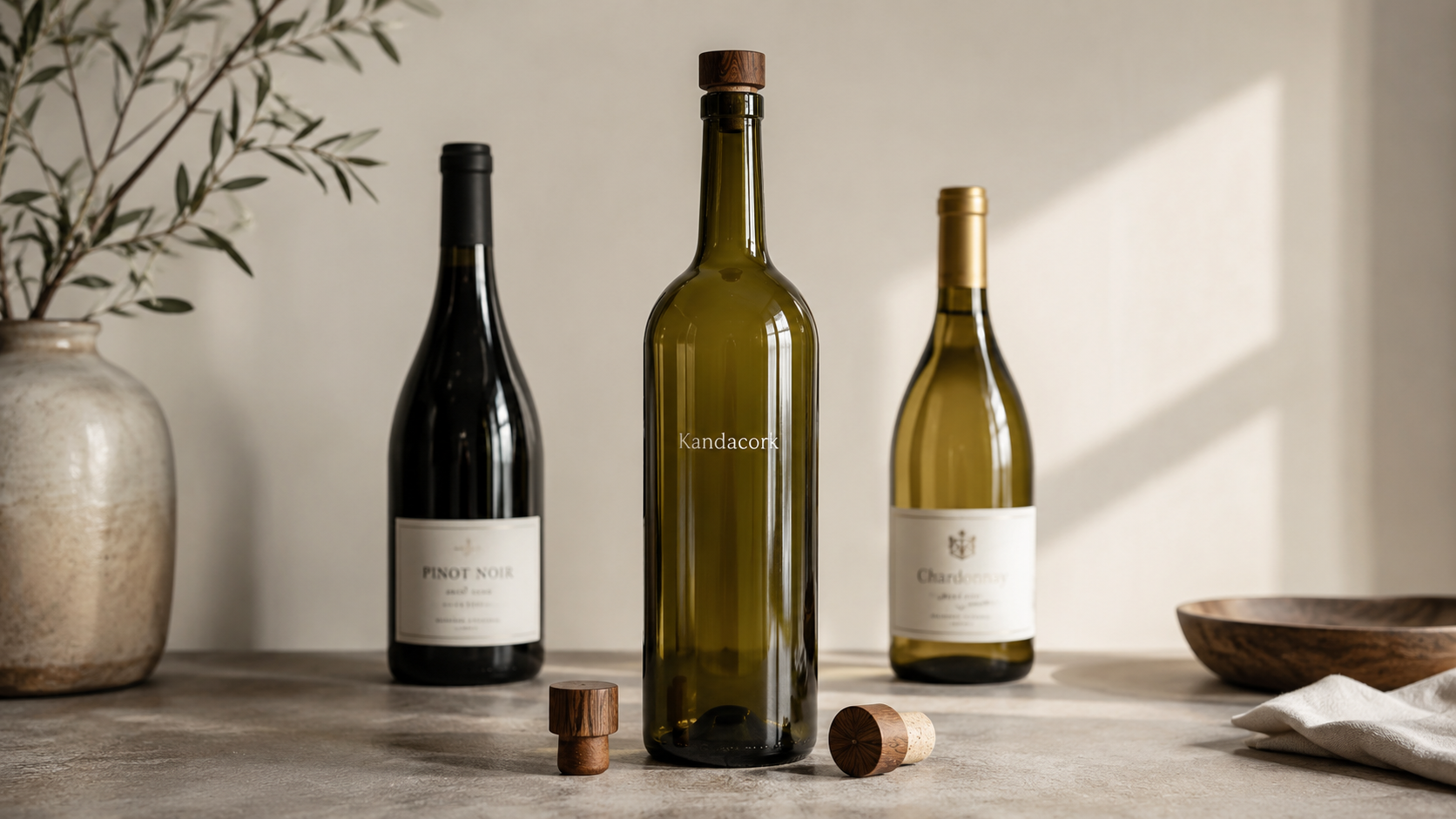
Eco glass bottle weight is the amount of glass used in a bottle while still maintaining strength, filling-line stability, closure performance, decoration quality, export safety, and premium shelf appeal. For spirits brands, the best lightweight bottle is not simply the lowest gram weight. It is the best balance between sustainability, cost, brand positioning, and supply-chain reliability.
For whisky, gin, vodka, tequila, rum, brandy, liqueur, and craft spirits brands, glass weight has become a major packaging decision. It affects freight cost, carbon footprint, bottle feel, shelf positioning, export safety, and consumer experience.
Kandacork Glass helps spirits brands evaluate lightweight glass bottles, recycled-content glass, closure systems, decoration methods, export packaging, and custom bottle development for B2B projects. Brands planning a sustainability-led bottle program can start with Kandacork’s dedicated page for eco and recycled-content spirits bottles, which covers recycled glass options, lightweighting, matched closures, decoration readiness, and export packing.
Quick Answer: The best eco glass bottle weight is the lowest practical weight that still protects filling-line stability, closure performance, decoration quality, export safety, and premium shelf appeal. Spirits brands should choose lightweight glass together with bottle shape, recycled content, closure type, decoration method, carton packing, and export route.
Eco Glass Bottle Weight Benchmarks by Capacity
There is no universal ideal weight for every spirits bottle. The right eco glass bottle weight depends on capacity, shape, base design, neck finish, glass color, decoration process, closure type, filling line, and export route.
| Capacity | Common Use | Typical Weight Direction | Buyer Notes |
|---|---|---|---|
| 50ml | Mini spirits, samples, gift sets | Small but often thick for premium feel | Prioritize decoration area and carton efficiency |
| 200ml / 250ml | Trial packs, RTD spirits, gift packs | Good lightweighting opportunity | Check stability during filling, labeling, and case packing |
| 375ml | Half-size spirits, tasting bottles | Often around 300–450g depending on design | Suitable for premium trial SKUs and retail gift sets |
| 500ml | Craft spirits, liqueurs, regional formats | Often around 400–600g depending on shape | Strong balance between premium feel and logistics |
| 700ml | EU spirits standard | Often around 500–700g+ depending on positioning | Confirm cork, bar-top, or screw finish compatibility |
| 750ml | US spirits standard | Often around 500–900g+ depending on design | High opportunity for glass weight reduction |
| 1000ml | Duty-free, club, and large-format spirits | Usually heavier for stability | Base strength, handling, and pallet stacking are critical |
These ranges are for planning only. Final bottle weight should be confirmed by mold design, wall distribution, base strength, neck finish, closure pressure, decoration requirements, and export testing.
Best Eco Glass Bottle Weight for 750ml Spirits Bottles
For 750ml spirits bottles, the best eco glass bottle weight depends on bottle shape, base thickness, neck finish, closure system, decoration, and shipping route. Many premium spirits bottles are heavier than necessary because brands use thick bases, wide shoulders, deep punts, or extra glass mass to create a luxury feel.
However, a 750ml spirits bottle does not need to be excessively heavy to look premium. Brands can often reduce unnecessary base or wall weight while maintaining a high-end appearance through better proportions, premium decoration, and a well-matched closure.
When comparing 750ml bottle options, buyers should review:
- Total bottle weight.
- Base diameter and stability.
- Wall thickness distribution.
- Neck finish and closure pressure.
- Labeling and decoration surface.
- Carton and pallet weight.
- Export packing strength.
- Total landed cost.
- Brand positioning in retail and hospitality channels.
A lightweight 750ml bottle may be suitable for gin, vodka, rum, tequila, liqueur, and private-label spirits when the bottle has been tested properly. For luxury whisky or high-end tequila, a moderate-weight eco bottle may be a better choice than an ultra-lightweight design because it can preserve a premium hand feel while still reducing unnecessary material.
Commercial Bottle Strategy Comparison
Different brands need different eco packaging strategies. The right solution depends on whether the priority is cost reduction, sustainability positioning, speed to market, or long-term brand differentiation.
| Buyer Goal | Recommended Bottle Strategy | What to Check |
|---|---|---|
| Lower freight cost | Lightweight spirits bottle | Carton weight, pallet weight, container loading, export route |
| Stronger sustainability claim | Recycled glass spirits bottle | Recycled content, color tolerance, batch consistency |
| Premium shelf presence | Moderate-weight eco bottle with premium closure | Shape, base feel, decoration, stopper quality |
| Fast market launch | Stock eco glass bottle | MOQ, available mold, decoration compatibility |
| Long-term brand differentiation | Custom lightweight glass bottle | Mold cost, testing, annual volume, lead time |
| Export-ready performance | Bottle and carton system optimization | Drop resistance, vibration risk, pallet compression |
| Private-label flexibility | Standard bottle with custom decoration | Label area, closure choice, lead time, cost control |
This table helps buyers avoid comparing only gram weight. The best eco glass bottle weight should support commercial goals, brand image, filling performance, and logistics efficiency at the same time.
Meaning of Eco Glass Bottle Weight
Eco bottle design usually combines material reduction, recycled glass content, and smarter supply-chain planning. A bottle should not only look sustainable; it should also perform reliably across production, shipping, retail, and consumer use.
In B2B spirits packaging, eco glass design may include:
- Reduced unnecessary glass mass.
- Lightweight bottle engineering.
- Recycled-content glass where available.
- Optimized bottle dimensions for cartons and pallets.
- Lower packed-case weight.
- Efficient export packaging.
- Closure and decoration compatibility.
- Traceable production and consistent quality control.
Glass remains widely used in premium spirits because it is inert, impermeable, recyclable, and highly compatible with luxury branding. The European Container Glass Federation explains that glass is 100% recyclable and can be recycled endlessly without loss of quality or purity, which is one reason it remains a preferred material for premium beverage packaging.
For spirits brands, this means the strongest sustainability strategy is not only about reducing grams. It is about combining lightweight spirits bottles, recycled glass options, premium design, reliable decoration, secure closures, and export-ready packaging.
Recycled Glass, Cullet, and Bottle Weight
Recycled glass, also known as cullet, can reduce the need for virgin raw materials in glass production. The Glass Packaging Institute notes that cullet is the industry term for recycled glass and identifies it as a major input in container glass manufacturing.
For spirits brands, recycled glass can support a strong sustainability story, especially when paired with a realistic glass weight reduction target. However, buyers should still define visual expectations clearly. Flint glass, antique green glass, amber glass, smoky glass, and dark custom colors may all behave differently in terms of clarity, bubbles, shade tolerance, and batch-to-batch appearance.
A recycled glass spirits bottle should be evaluated for:
- Recycled-content target.
- Glass color and clarity.
- Cosmetic tolerance.
- Bottle weight.
- Closure compatibility.
- Decoration performance.
- Export packing durability.
- Repeatability across future batches.
This is why recycled-content glass and lightweight glass should not be treated as separate decisions. In many projects, the best result comes from combining both strategies carefully.
Importance of Bottle Weight in Spirits Packaging
Bottle weight matters because spirits packaging must perform across the full supply chain.
A spirits bottle may move from glass production to decoration, filling, corking or capping, labeling, carton packing, palletizing, warehousing, export shipping, retail display, bar service, and consumer handling. At each stage, weight affects cost, performance, and risk.
A well-designed lightweight spirits bottle can help brands:
- Reduce material use.
- Lower freight weight.
- Improve logistics efficiency.
- Support sustainability claims.
- Reduce over-packaging concerns.
- Improve handling for distributors and retailers.
- Align with retailer and consumer sustainability expectations.
- Maintain premium appearance through smarter design.
The Sustainable Wine Roundtable’s Bottle Weight Accord is wine-focused, but it is useful for broader beverage packaging discussions because it treats glass bottle weight as an important packaging-related carbon factor and sets a clear reduction target for 750ml still wine bottles.
Spirits bottles are often heavier than wine bottles because many premium brands use thick bases, custom shapes, luxury decoration, deep punts, and high-end closures. This makes eco glass bottle weight especially important for distilleries and spirits brands that want a more sustainable package without losing premium value.
As retailers, distributors, and beverage groups continue to evaluate packaging-related emissions, spirits brands should review bottle weight, recycled-content options, and export packaging specifications during every new product launch or redesign.
Situations Where Spirits Brands Should Reduce Glass Bottle Weight
A brand should consider reducing glass bottle weight when packaging weight creates commercial, environmental, or supply-chain pressure.
Common triggers include:
- Freight cost is increasing.
- Retailers request more sustainable packaging.
- The current bottle feels over-engineered.
- Export cartons are too heavy.
- The brand wants to lower packaging-related emissions.
- A new eco-positioned spirits line is being launched.
- The company wants to keep glass but reduce unnecessary material.
- The bottle has a very heavy base that does not add functional value.
- The brand wants to improve pallet and container efficiency.
- The current bottle creates handling issues for distributors or retail staff.
This does not mean every spirits brand should choose the lightest available bottle. Premium whisky, tequila, gin, and rum brands may still need a strong bottle feel. The better approach is to remove unnecessary glass while protecting the parts of the bottle that affect strength, stability, and consumer perception.
Engineering Behind Lightweight Spirits Bottles
Lower glass weight does not automatically mean lower strength. A lightweight bottle can perform well when the design is engineered correctly.
The most important factor is glass distribution. A bottle should not simply be made thinner everywhere. Instead, non-critical areas should be optimized while stress points remain protected.
Important engineering factors include:
- Wall thickness distribution.
- Shoulder transition.
- Heel radius.
- Base geometry.
- Push-up or punt design.
- Neck finish strength.
- Vertical load resistance.
- Impact resistance.
- Thermal shock behavior.
- Closure application pressure.
- Carton compression.
- Conveyor stability.
- Pallet stacking performance.
A professional custom lightweight glass bottle project should review the bottle as a complete system. Kandacork’s Design, R&D and manufacturing process explains how bottle shape, weight, wall thickness, punt depth, label areas, closure fit, decoration windows, and export behavior can be considered from early concept through production.
Before approving a lightweight spirits bottle, buyers should request suitable performance checks such as vertical load testing, top-load testing, impact resistance review, closure torque or pressure testing, label application trials, carton compression review, and drop or vibration simulation for export routes. ISTA describes its package test procedures as ranging from early design screening to general simulations of distribution hazards, which is a useful reference point when planning export validation.
These checks help confirm whether a lower eco glass bottle weight is practical for real supply-chain conditions. A bottle that looks good in a sample room still needs to perform during filling, packing, warehousing, container loading, and final delivery.
For B2B buyers, the goal is not to request “the lightest bottle.” The better request is to ask for a bottle that meets target weight, filling-line requirements, closure performance, decoration expectations, and export packing standards.
Recycled Glass and Lightweight Glass Comparison
Recycled glass and lightweight glass both support sustainable spirits packaging, but they solve different problems.
| Option | Best For | Advantages | Watchouts |
|---|---|---|---|
| Lightweight glass | Brands focused on freight, material reduction, and lower packed weight | Lower material use, improved logistics, easier handling | Requires structural validation |
| Recycled-content glass | Brands focused on circularity and lower virgin material use | Strong sustainability story | Color, clarity, and visual consistency need control |
| Tinted recycled glass | Amber, green, smoky, antique, and dark spirits bottles | Easier to manage natural color variation | Must match brand identity |
| Custom eco bottle | Established brands with stable volume | Best control over shape, weight, and brand differentiation | Requires mold investment and longer timeline |
| Stock bottle with eco decoration | Faster launches and smaller runs | Shorter lead time and lower complexity | Less unique sustainability positioning |
For brands that need a strong environmental story, recycled glass can be attractive. For brands focused on shipping efficiency, lightweight glass may be more important. For brands building a long-term premium line, the best option may be a custom bottle that combines controlled weight reduction with recycled-content discussion, premium decoration, and a matching closure system.
Premium Appearance with Less Glass
Many spirits brands worry that a lighter bottle will feel cheap. This concern is valid, especially for premium whisky, tequila, gin, rum, and liqueur packaging.
However, premium perception does not come only from weight. It also comes from shape, proportion, balance, finish, closure quality, decoration, label texture, and brand storytelling.
A premium lightweight spirits bottle can use:
- A distinctive silhouette.
- A confident shoulder profile.
- A stable base without excessive glass mass.
- High-quality label paper.
- Embossed or debossed branding.
- Matte coating.
- Frosted glass.
- Screen printing.
- Metallic decoration.
- Custom neck details.
- Wood, aluminum, glass, or cork bar-top closures.
- Premium capsules or tamper-evident seals.
A heavy bottle can feel premium, but it can also create sustainability concerns. A lighter bottle with strong design, tactile decoration, and a premium closure can deliver a high-end experience with less unnecessary material.
For bottle finishes, surface effects, screen printing, frosting, hot stamping, decals, coating, carving, labeling, and electroplating, Kandacork’s premium spirits bottle decoration options can help brands connect lower bottle weight with a stronger shelf presence.
Filling-Line Compatibility
A lighter bottle must work on the filling line. Even a beautiful eco bottle can cause problems if it tips, labels poorly, seals inconsistently, or breaks during packing.
Before approving an eco glass bottle weight, buyers should review:
- Filling speed.
- Conveyor stability.
- Bottle spacing.
- Capping or corking equipment.
- Closure pressure or torque.
- Labeling machine compatibility.
- Case packing method.
- Pallet stacking height.
- Breakage history.
- Export shipping conditions.
- Temperature and pressure changes.
This is especially important when replacing a heavy bottle with a lower-weight design. The new bottle may require changes to conveyor guides, label placement, carton dividers, or pallet layout.
A strong supplier should help buyers check these details before bulk production.
Decoration and Closure Compatibility
Bottle weight should not be selected separately from decoration and closure. When the bottle becomes lighter, the closure and decoration become even more important for premium perception.
Common decoration options include:
- Frosted glass.
- Matte spray coating.
- Gloss coating.
- Screen printing.
- Ceramic printing.
- Decals.
- Hot stamping.
- Embossed glass logos.
- Debossed brand marks.
- Paper labels.
- Metallic labels.
- Shrink sleeves.
- Neck capsules.
Common closure options include:
- Natural cork bar-top closures.
- Synthetic cork closures.
- Wood-top stoppers.
- Aluminum-top stoppers.
- Glass-top stoppers.
- ROPP caps.
- Screw caps.
- Tamper-evident closures.
A premium lightweight bottle with a low-quality closure may feel unfinished. A moderate-weight eco bottle with a precise closure, strong label material, and refined decoration can feel much more premium.
For closure fit, extraction force, sealing feel, and brand presentation, Kandacork’s custom bottle stoppers and closures can be matched with the bottle neck, glass weight, decoration route, and filling-line requirements.
Export Packaging and Logistics
Bottle weight is only one part of the export packaging system.
A lightweight bottle can still fail if the carton, divider, pallet, or container-loading plan is weak. A slightly heavier bottle can also create unnecessary freight cost if the full pack is over-engineered.
Export-ready spirits packaging should consider:
- Carton board strength.
- Divider material.
- Bottle-to-bottle contact.
- Bottle orientation.
- Carton compression.
- Pallet pattern.
- Stretch wrapping.
- Warehouse stacking height.
- Container loading.
- Route conditions.
- Climate and humidity.
- Mixed-SKU packing.
- Drop and vibration risk.
ASTM D642 is a recognized method for evaluating the compressive resistance of shipping containers, components, and unit loads, which is relevant when lightweight bottle projects also require carton and pallet validation.
For global spirits brands, the key question is not only how much the bottle weighs. The complete question is how the filled bottle performs from the filling plant to the final retail or hospitality market.
Kandacork Glass can help B2B buyers evaluate bottle selection, closure pairing, decoration, carton packing, and export logistics as one integrated packaging system.
Common Mistakes When Choosing Eco Glass Bottle Weight
Many bottle-weight problems happen because buyers compare only the gram weight and ignore the full packaging system.
Common mistakes include:
- Choosing the lightest bottle without checking filling-line stability.
- Comparing bottle weights without comparing shape and base diameter.
- Ignoring closure pressure or torque requirements.
- Forgetting label and decoration compatibility.
- Approving samples before testing carton packing.
- Using recycled-content claims without defining color tolerance.
- Ignoring export pallet layout.
- Reducing bottle weight but increasing secondary packaging waste.
- Choosing a stock bottle that does not match the brand position.
- Treating sustainability as a visual claim instead of a technical packaging decision.
The best eco glass bottle weight decision should support sustainability, premium appearance, operational safety, and commercial scalability at the same time.
Selection Guide for the Right Eco Glass Bottle Weight
Use the following framework before confirming a lightweight or recycled-content spirits bottle.
- Define the target market, such as EU, US, UK, Asia, duty-free, or private label.
- Confirm the required capacity, such as 500ml, 700ml, 750ml, or 1000ml.
- Identify the current bottle weight if replacing an existing package.
- Decide the sustainability priority: lower weight, recycled content, refillability, or combined eco design.
- Confirm brand positioning: craft, premium, luxury, value, RTD, or private label.
- Select the closure type early.
- Confirm neck finish requirements.
- Choose the decoration method before final bottle approval.
- Review filling-line conditions.
- Request drawings, dimensions, weight, capacity tolerance, and packing details.
- Test bottle samples with the closure and decoration.
- Review carton packing and pallet layout.
- Compare total landed cost, not only bottle unit price.
- Confirm batch consistency, traceability, and long-term supply capability.
This approach helps prevent costly changes after mold development, sample approval, or bulk production.
RFQ Checklist for Eco Glass Bottle Projects
To receive a faster and more accurate quotation from Kandacork Glass, prepare the following details:
- Spirit type: whisky, gin, vodka, tequila, rum, brandy, liqueur, or RTD.
- Bottle capacity.
- Target market.
- Current bottle weight, if available.
- Target eco glass bottle weight or weight reduction goal.
- Annual quantity.
- First order quantity.
- Preferred glass color.
- Recycled-content requirement.
- Bottle shape reference.
- Closure type.
- Neck finish.
- Decoration method.
- Label size and material.
- Export destination.
- Packing requirements.
- Required test reports.
- Launch timeline.
- Budget range.
- Stock bottle or custom mold preference.
The more technical and commercial details a buyer provides, the easier it is to recommend a realistic eco bottle solution.
Conclusion
The best eco glass bottle weight is not simply the lowest number on a specification sheet. It is the weight that gives a spirits brand the right balance of sustainability, premium appearance, filling-line performance, closure compatibility, decoration quality, export safety, and cost control.
For some brands, the right solution may be a lightweight stock bottle. For others, it may be a custom recycled glass spirits bottle with controlled weight reduction, premium decoration, and a matching closure system.
Kandacork Glass supports spirits brands with stock bottle selection, custom lightweight glass bottle development, recycled-content discussion, decoration, closures, sample testing, export packing, and bulk supply planning.
Share your capacity, current bottle weight, target market, closure preference, decoration plan, and annual volume to request a custom spirits packaging quote from Kandacork Glass.
Frequently Asked Questions
What is a good eco glass bottle weight for spirits?
A good eco glass bottle weight is the lowest practical weight that still protects filling-line stability, closure performance, decoration quality, export safety, and premium brand perception. The right weight depends on capacity, shape, base design, neck finish, closure type, decoration method, and export packing.
What is the best eco glass bottle weight for a 750ml spirits bottle?
The best eco glass bottle weight for a 750ml spirits bottle depends on the bottle shape, base thickness, neck finish, closure system, decoration, and shipping route. Many premium spirits bottles are heavier than necessary, so brands should compare both visual impact and functional performance before choosing a lightweight or recycled-content bottle.
Does lightweight glass break more easily?
Lightweight glass does not automatically break more easily. Breakage depends on wall distribution, shoulder design, base geometry, stress points, closure pressure, carton packing, pallet layout, and handling conditions. A well-engineered lightweight bottle can perform reliably when it is tested as part of the full packaging system.
Is a heavier spirits bottle always more premium?
A heavier bottle can create a premium feel, but weight is not the only signal of quality. Premium perception can also come from proportion, silhouette, label material, embossing, coating, screen printing, closure design, and brand storytelling.
Can recycled glass be used for premium spirits bottles?
Yes. Recycled glass can be used for premium spirits bottles, especially in amber, green, antique, smoky, or custom-colored glass. For flint glass, buyers should discuss clarity, bubbles, color consistency, and batch-to-batch visual tolerance with the supplier.
How should buyers compare two bottle weights?
Buyers should compare capacity, shape, height, base diameter, neck finish, closure type, decoration process, carton design, pallet pattern, MOQ, lead time, and total landed cost. Gram weight alone does not show whether a bottle is suitable for filling, export, and premium retail positioning.
Can Kandacork Glass help develop custom lightweight spirits bottles?
Yes. Kandacork Glass can support stock bottle selection, custom lightweight spirits bottle development, recycled-content discussion, decoration, closure matching, sample testing, export packing, and B2B bulk supply planning.